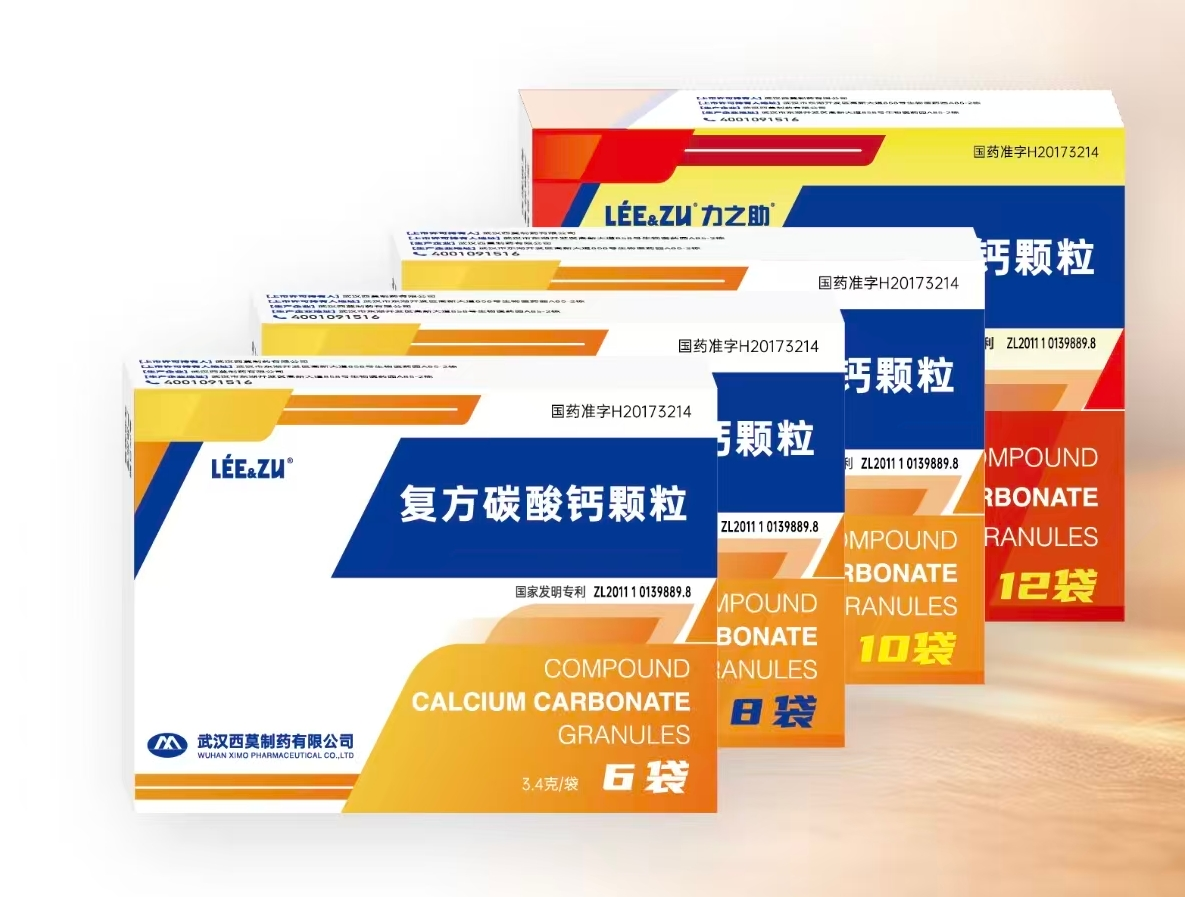
Study overview
A 2025 Chinese Journal of New Drugs systematic review used network meta-analysis and a decision-tree cost-effectiveness model. Compound calcium carbonate granules showed favorable response, recurrence and bone-density Z-score outcomes versus calcium carbonate D3 granules, without a significant safety difference. The study concluded that the formulation had a high probability of being cost-effective for nutritional rickets.
- Research focus
- Pediatric nutritional rickets; health economics
- Study design
- Network meta-analysis and decision-tree cost-effectiveness analysis
- Publication / contributor
- Chinese Journal of New Drugs
Main findings
| Measure | Result | Context |
|---|---|---|
| Effective rate / recurrence / bone density Z-score | Overall results favored compound calcium carbonate granules over calcium carbonate D3 granules | |
| Safety | No significant difference | |
| ICER vs calcium carbonate D3 granules | 4261.91 CNY/case | |
| ICER vs pediatric calcium carbonate D3 granules | 4244.73 CNY/case | |
| Sensitivity analysis | Broadly consistent with the base-case analysis |
Results and interpretation
This 2025 study used network meta-analysis to compare treatments for nutritional rickets and a decision-tree model for cost-effectiveness analysis. It examined clinical outcomes, safety and economic value.
The journal abstract reports favorable efficacy, recurrence and bone-density Z-score comparisons for compound calcium carbonate granules versus calcium carbonate D3 granules, without a significant safety difference. ICERs were 4261.91 CNY/case versus calcium carbonate D3 granules and 4244.73 CNY/case versus the pediatric D3 preparation.
Under the treatment strategies, prices and model conditions evaluated, the study concluded that compound calcium carbonate granules had a high probability of being cost-effective for nutritional rickets. Sensitivity analyses were broadly consistent with the base-case findings.
Study notes
Findings depend on the included literature, comparators, model assumptions and prices. An ICER expresses modeled incremental cost per additional effect, rather than the total cost of a treatment course.
Safety comparisons reflect outcomes reported in the included studies. Nonsignificant differences should be interpreted alongside sample size, follow-up and adverse-event reporting.
References
Zhan Mengru, Li Yan, Tian Chenhui et al. Systematic review and pharmacoeconomic analysis of compound calcium carbonate granules for nutritional rickets. Chinese Journal of New Drugs. 2025;34(12):1322–1331. DOI:10.20251/j.cnki.1003-3734.2025.12.013.
